
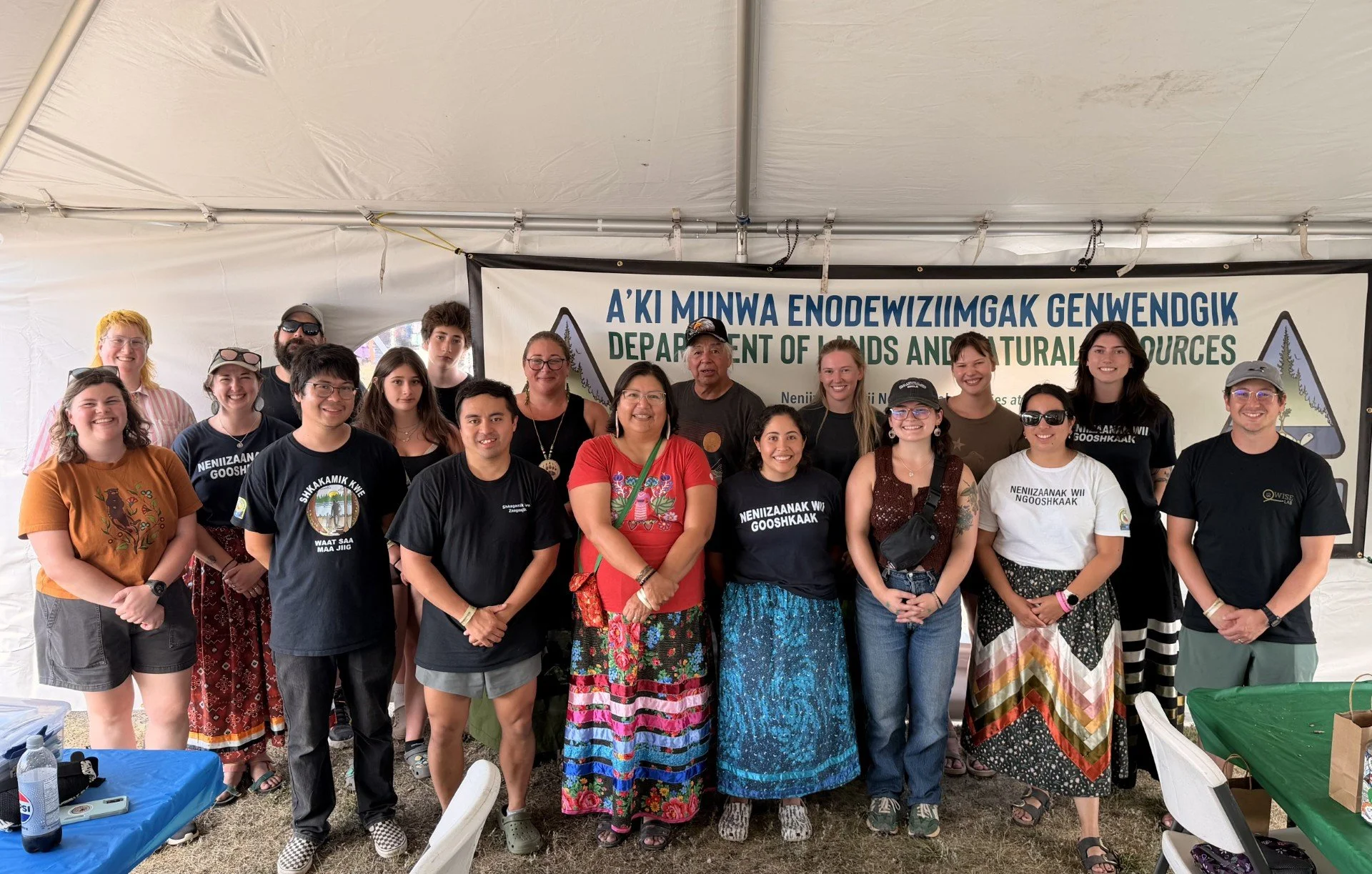
WISE and Young Labs at the Wiikwemkoong pow wow helping run the Department of Lands and Resources information booth in 2026

The WISE Lab team cooling off in Magnetawan First Nation. Photo credit: Junaid Khan
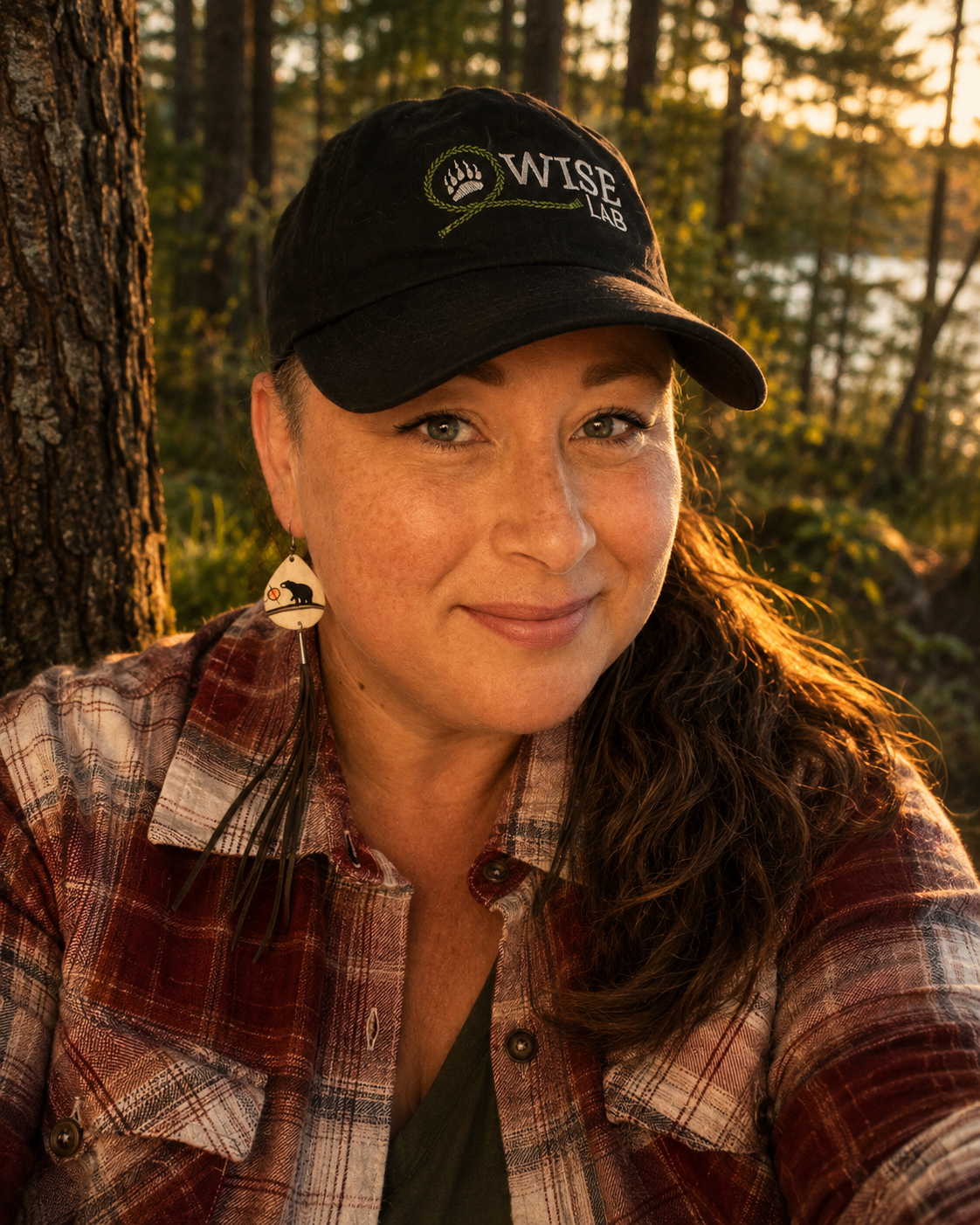
Dr. Jesse N. Popp
(she/her) Principal Investigator
Dr. Jesse Popp is a Chair in Indigenous Environmental Science at the University of Guelph. She is a member of Wiikwemkoong Unceded Territory with Anishinaabe and mixed European heritage, and strives to promote inclusive science that embraces multiple ways of knowing while on her journey of learning and sharing. As the PI of the Wildlife, Indigenous Science, Ecology (WISE) Lab, she and her research team work to weave Indigenous and Western knowledge systems to contribute to the advancement of environmental and ecological science. Together, the WISE Lab team embraces holistic and transdisciplinary research approaches to investigate ecological research questions identified by the Indigenous communities and organizations that they partner with. Through Indigenous-led projects that uplift Indigenous values and ways of knowing, Dr. Popp and her team contribute to environmental caretaking and the progression of the natural sciences in the spirit of reconciliation.

Jessica Lukawiecki, postdoctoral fellow
Re-establishing healthy relationships to wild species
Jessica is a Postdoctoral Fellow of settler descent co-supervised by Dr. Jesse Popp and Dr. Susan Kutz. Jessica is a community engaged social scientist with a PhD in Geography at the University of Guelph. Her research explores the cultural significance of wild species to Indigenous Peoples, looking at options for reconciling endangered species laws with Indigenous rights and priorities, while amplifying Indigenous-led stewardship of wild species through Guardians Programs and Indigenous Protected and Conserved Areas (IPCAs).
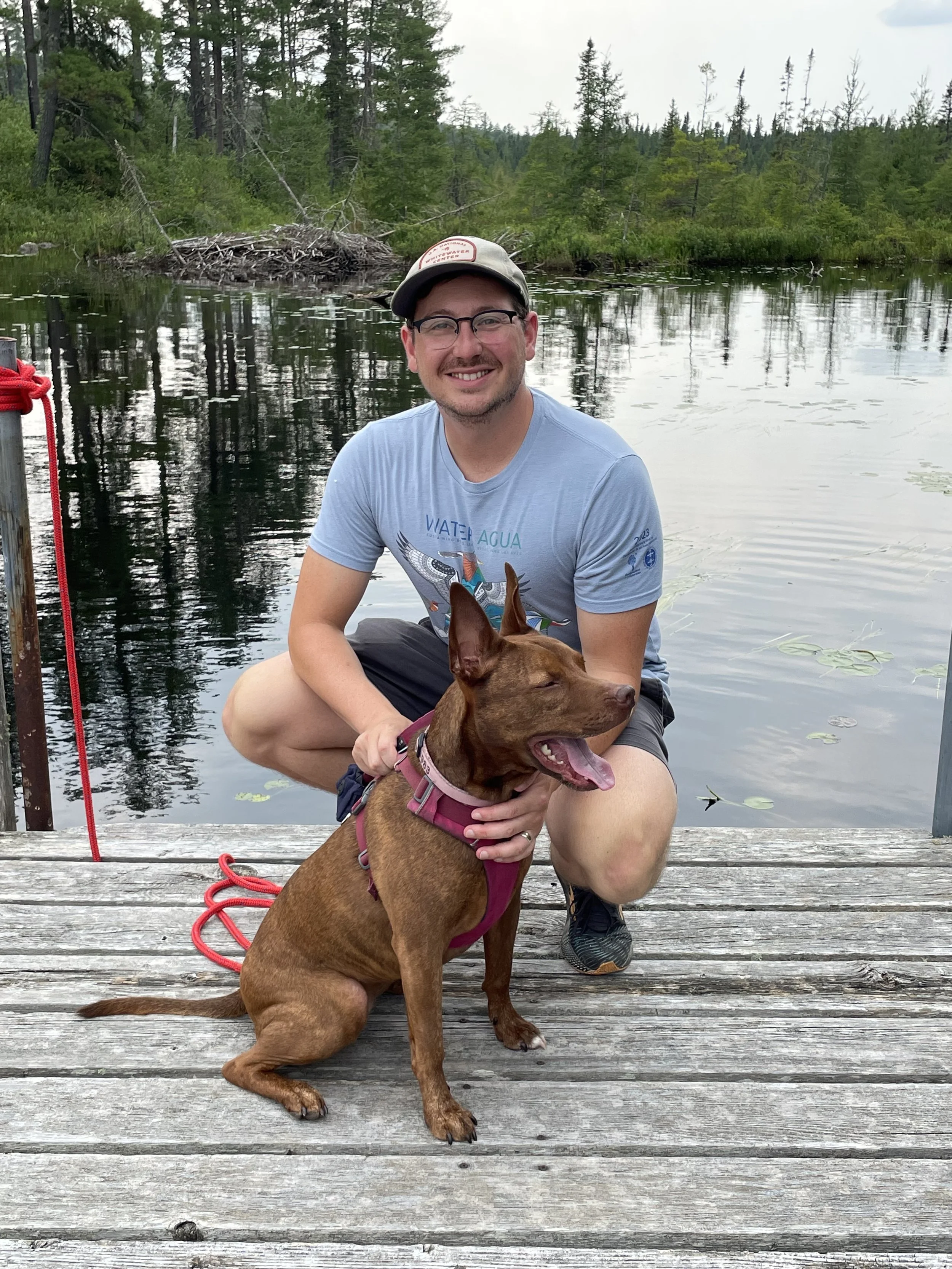
Lucas Rapisarda, Postdoctoral Fellow
Moose Knowledge Networking
Lucas is a settler of Italian and English descent and spent most of his life living and working in the United States as an educator and community organizer around environmental issues. For his PhD at the University of Minnesota, Lucas implemented community-based research practices to design place-based natural history curriculum for adult immigrants in Minnesota. He and his partner Megan, daughter Charlotte (1 year old!), and dog Ruby have moved to Guelph, ON and Lucas has joined the Moose Alliance team as a postdoctoral fellow. He is eager to continue implementing community-based approaches that center Indigenous voices around moose. Outside of work, Lucas loves hiking, bicycling, canoeing, fishing, and birdwatching.
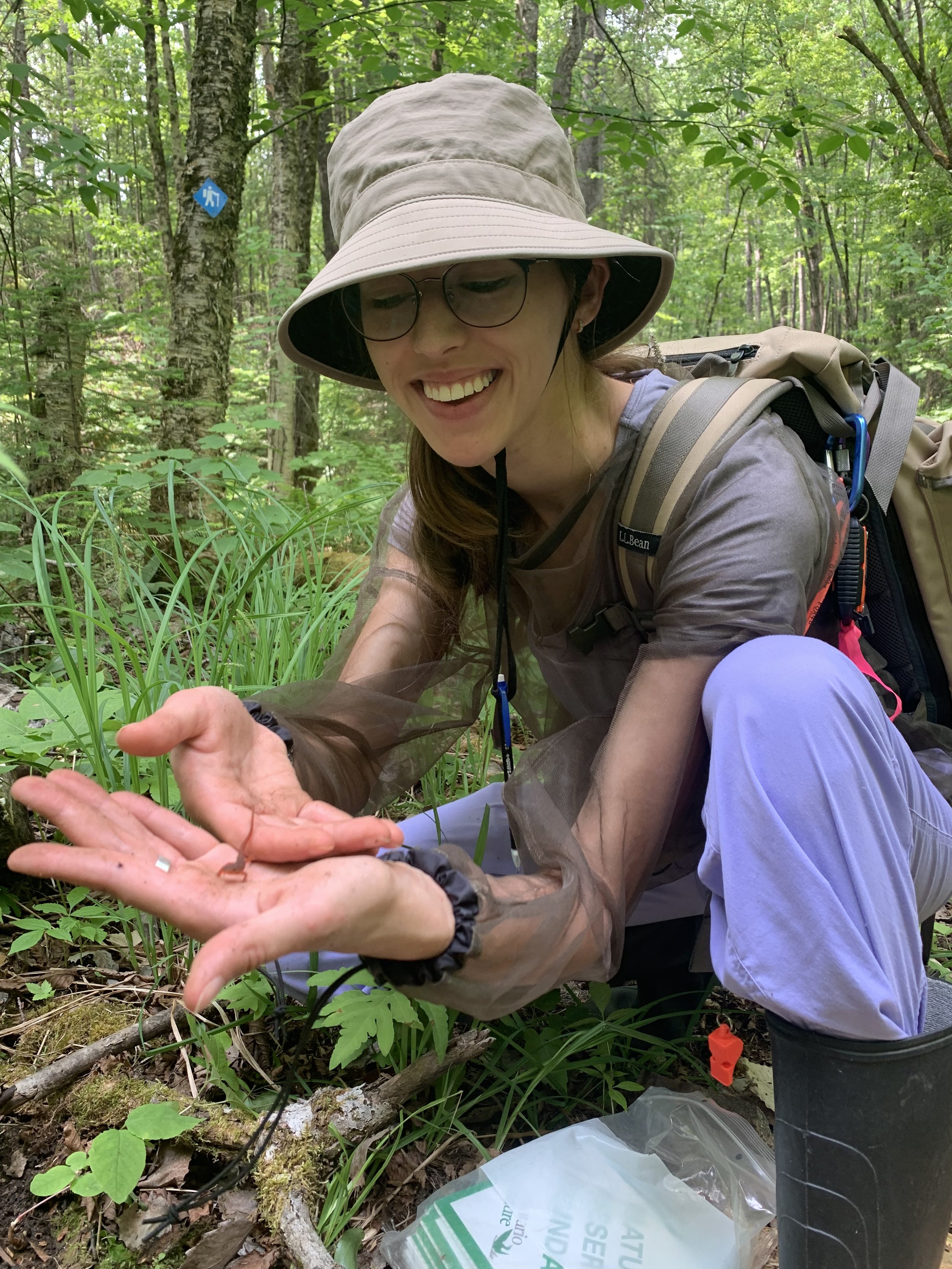
Alice Dabrowski (she/her), PhD Student
Flower fly larvae taxonomy, outreach, and aphid control
Alice is a non-Indigenous Ph.D. student at the University of Guelph co-supervised by Dr. Jesse Popp and Dr. Andrew Young. Her research documents flower fly larval diversity and ecology in the eastern regions of Turtle Island. Her work aims to produce field guides for community science projects and develop low cost flower fly larvae options for aphid control in remote greenhouses. Beyond flower flies, Alice has a background in restoration ecology and environmental science. She hopes to support community environmental programs and facilitate capacity building.
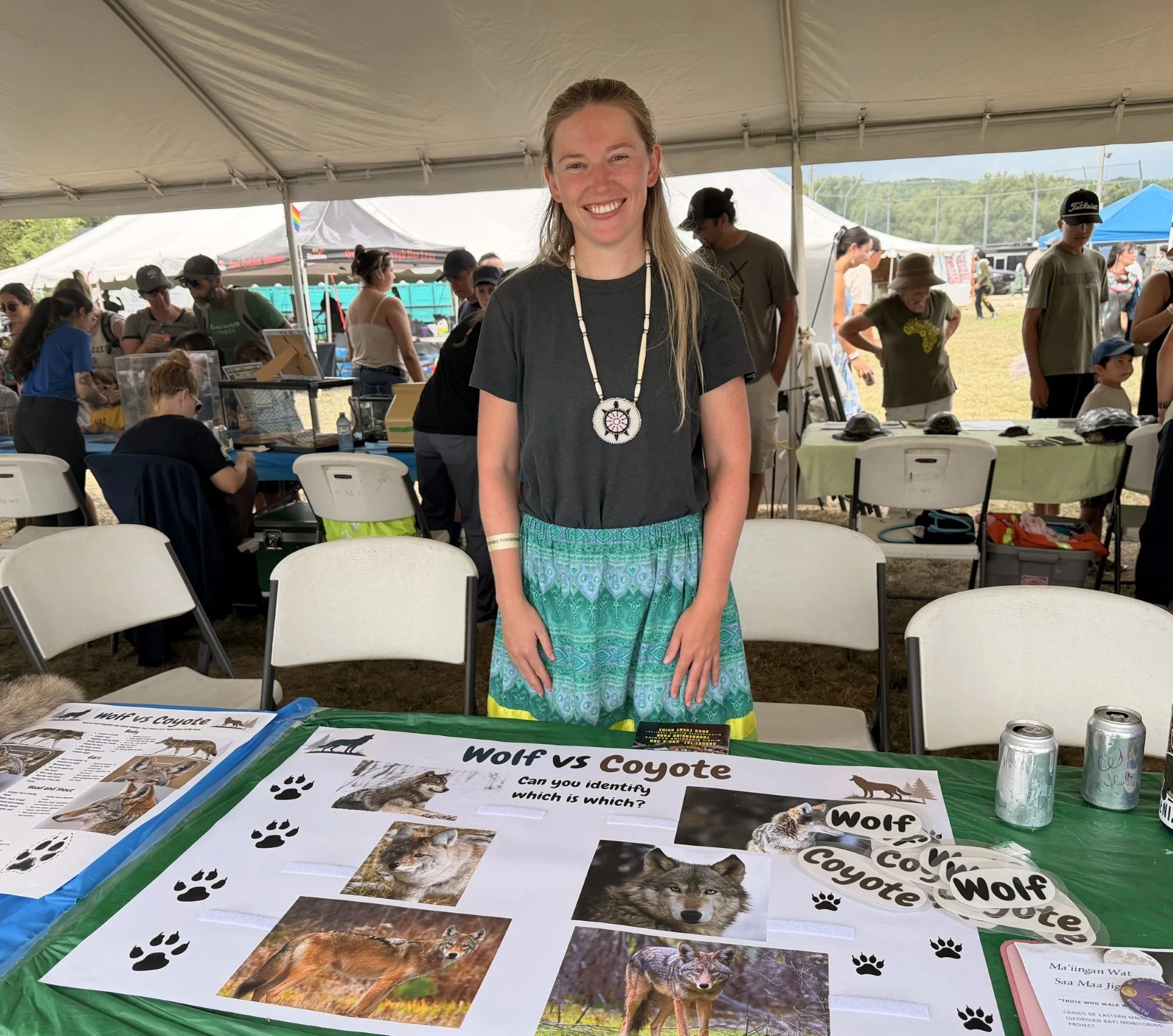
Jessie Armstrong, PHd Student
Re-establishing good relationships with wolves
Jessie’s research, conducted in collaboration with the Wiikwemikoong Unceded Territory Species at Risk Program, focuses on Ma’iingan (Wolf) and explores the reciprocal relationships between wolves, people, and the environment.
Jessie is of mixed settler and Indigenous ancestry and is a proud member of Kitigan Zibi Anishinabeg. Before joining the University of Guelph, she completed an Honours BSc in Environmental Science at Acadia University and an MSc in Environmental Science at the University of Toronto. Her research interests centre on Indigenous-led and community-based approaches to conservation, bringing together Indigenous Knowledge and Western science.
Outside of her research, Jessie enjoys spending time at the cottage with her dog, and cheering on the Toronto Maple Leafs. She also travels with her older sister to First Nations communities across Ontario, where they run hockey development programs for Indigenous youth.

CLAIRE KEMP (SHE/HER), Project manager
Mooz Alliance
A recent graduate from the WISE Lab, Claire now works as the Mooz Alliance Project Manager. In partnership with Magnetawan First Nation, her MSc focused on prioritizing community-specific knowledge and values within biodiversity monitoring through the use of wildlife cameras. Her current role involves a combination of coordinating community-based moose monitoring and research, supporting Land-based learning initiatives, and collaborating with different Nations and organizational partners to work towards understanding and caring for our moose relatives.
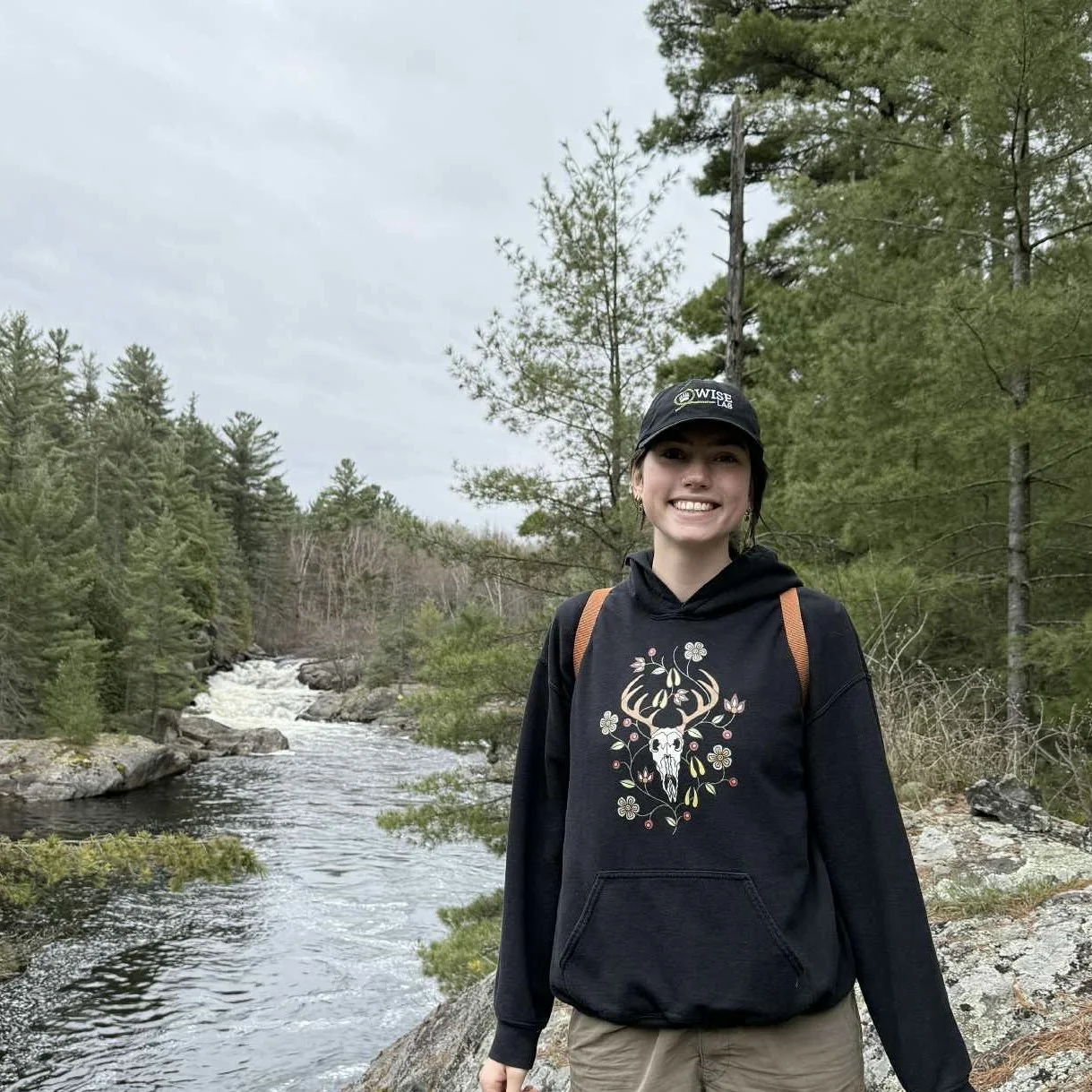
Katherine norman (She/They), MSc Student
Assessing emerald ash borer impact on black ash stands
Katherine is a non-Indigenous M.Sc. candidate at the University of Guelph, co-supervised by Dr. Jesse Popp and Dr. Andrew Young. In partnership with the Wiikwemikoong Unceded Territory (WUT) Species-At-Risk Program, they are monitoring the spread of Emerald Ash Borer (EAB) among black ash. Through methods co-developed with the community, Katherine works to map and assess black ash stands, to help inform and support WUT’s efforts to steward this culturally significant species in the face of invasive species.
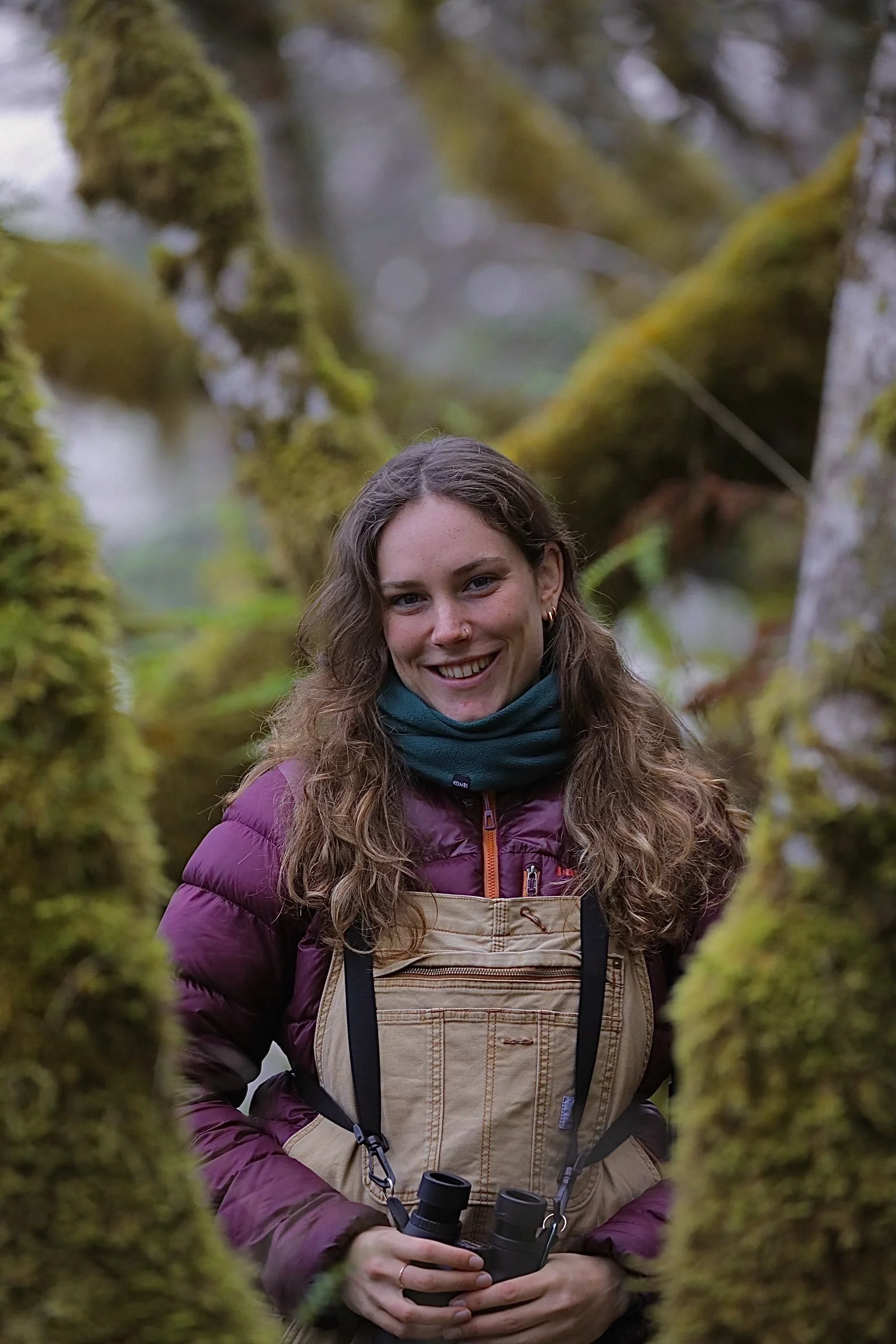
Kyra Kestrel (She/Her), MSc Student
Understanding black bear (Mukwa) distribution on the Bruce Peninsula
Kyra is an MSc candidate in the WISE Lab at the University of Guelph, co-supervised by Jessie Popp and Joe Northrup. In partnership with the Saugeen Ojibway Nation, her research uses camera traps to study the distribution of the genetically isolated population of Black Bears (Mukwa) on the Bruce Peninsula. By bringing together community priorities with conventional conservation methods, her project aims to bring together Indigenous and Western knowledge systems to better support wildlife conservation and management outcomes.
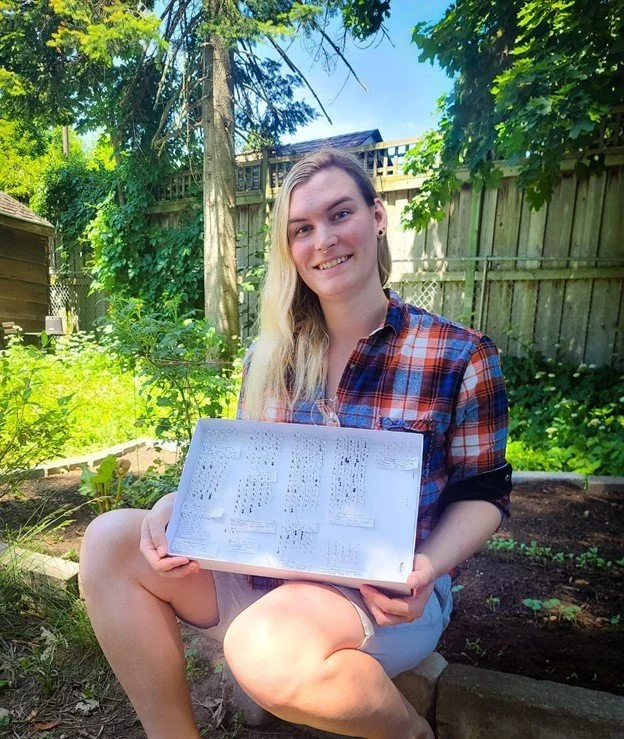
Aaron Fairweather (they/them), Research associate
Relational Accountability
Dr. Aaron Fairweather is an entomologist and science communicator based in Guelph, Ontario, specializing in ant diversity, ecology, and ecotoxicology. Their lifelong fascination with insects led them to the New Brunswick Museum at fifteen, where they helped curate the entomology collection. This propelled them towards the region’s understudied ants. The curiosity grew into an MSc examining how human disturbance shapes ant diversity in Ontario and New Brunswick, followed by a PhD exploring ants’ ecological roles in agriculture and their responses to environmental contaminants. Their research spans forests, farms, parks, and protected natural areas, combining insect identification, biodiversity surveys, and laboratory experimental research to understand how insects respond to environmental change. Alongside their research, Aaron has taught entomology, ecotoxicology, environmental science, and nature interpretation at the University of Guelph. Through public insect walks, school visits, television, radio, and their entobird platforms, they invite people of all ages to explore the diversity, ecological importance, and grow their connections with our insect relations. Aaron is committed to inclusive, accessible education and collaborative research that strengthens connections between people and the natural world. They aim to bring their expertise in entomology and science communication to the WISE lab with educational and research-based initiatives that support encouraging scientific growth in a good way, and fostering relational bonds with the small, often forgotten, beings of Turtle Island.
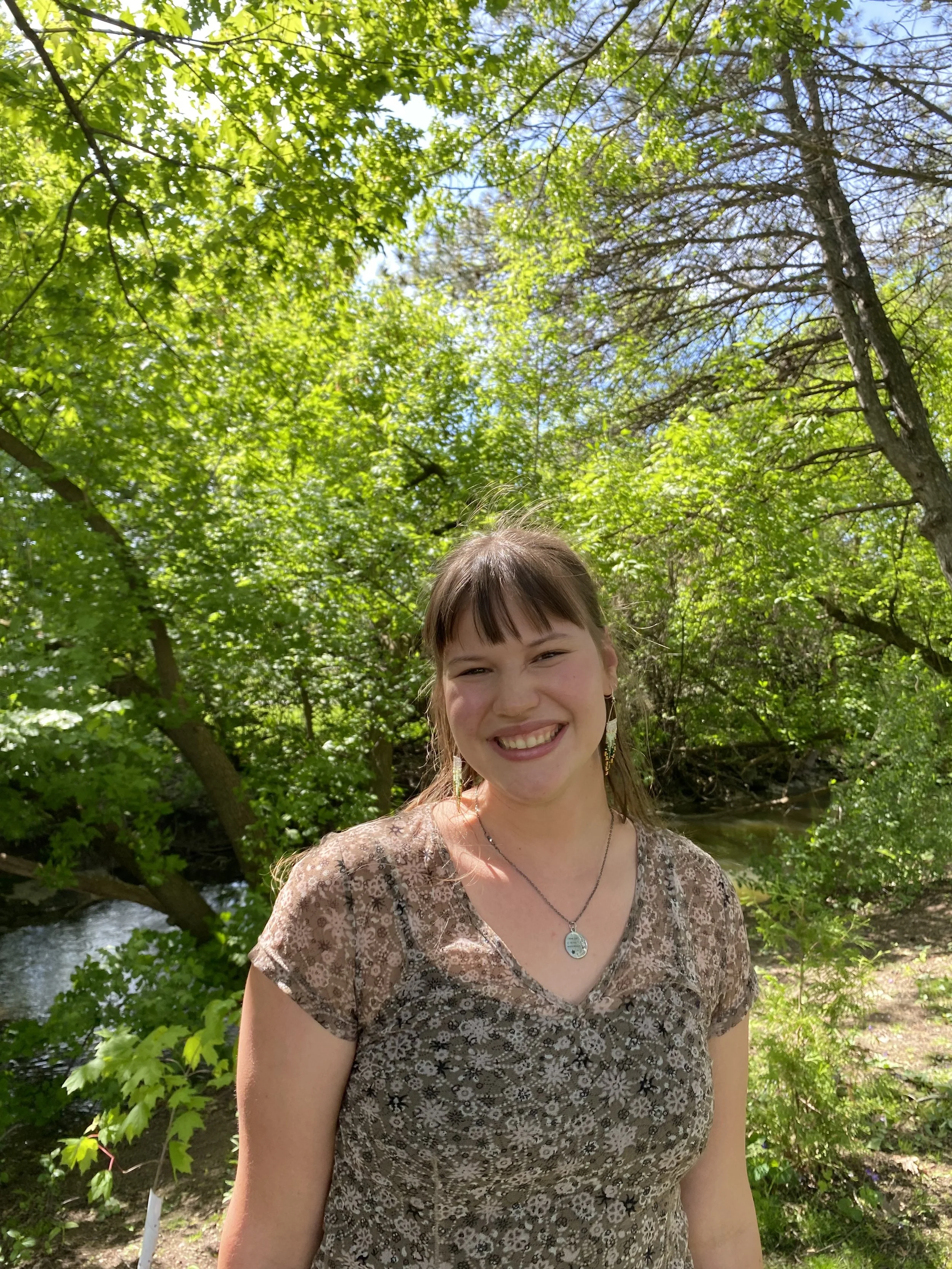
zoe Bakker, MSc Student
Weaving knowledges to understand Mooz habitat selection in Batchewana First Nation
Zoe is a MSc candidate at the University of Guelph co-supervised by Dr. Jesse Popp and Dr. Susan Chiblow. She is of settler descent and was born and raised on the traditional territory of Anishinaabek, Haudenosaunee, and Wendat Peoples. At the WISE Lab, she is a part of the Moose Alliance, working with Batchewana First Nation to monitor moose and their habitat. By co-developing methods with the community, she aims to weave different ways of knowing to inform moose management and conservation in a holistic and equitable way.
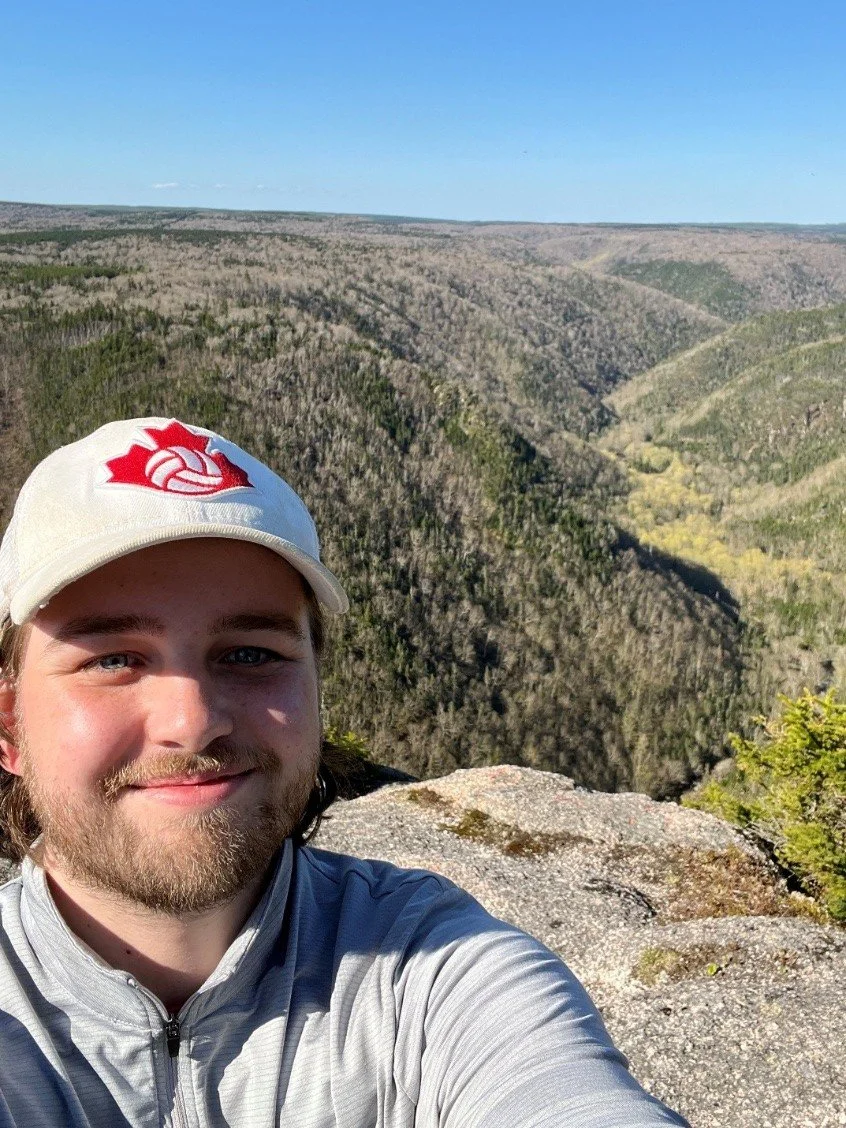
Gareth acton, Msc Student
Mooz ecology and population monitoring
Gareth is a non-Indigenous MSc student at the University of Guelph, supervised by Dr. Jesse Popp. In partnership with Nipissing First Nation and the WISE Lab, Gareth is working with the community to co-develop ecological questions regarding Mooz (moose) and by weaving Western and Indigenous research methodologies and knowledge systems together. He hopes to raise more awareness about the support the caretaking of Mooz.
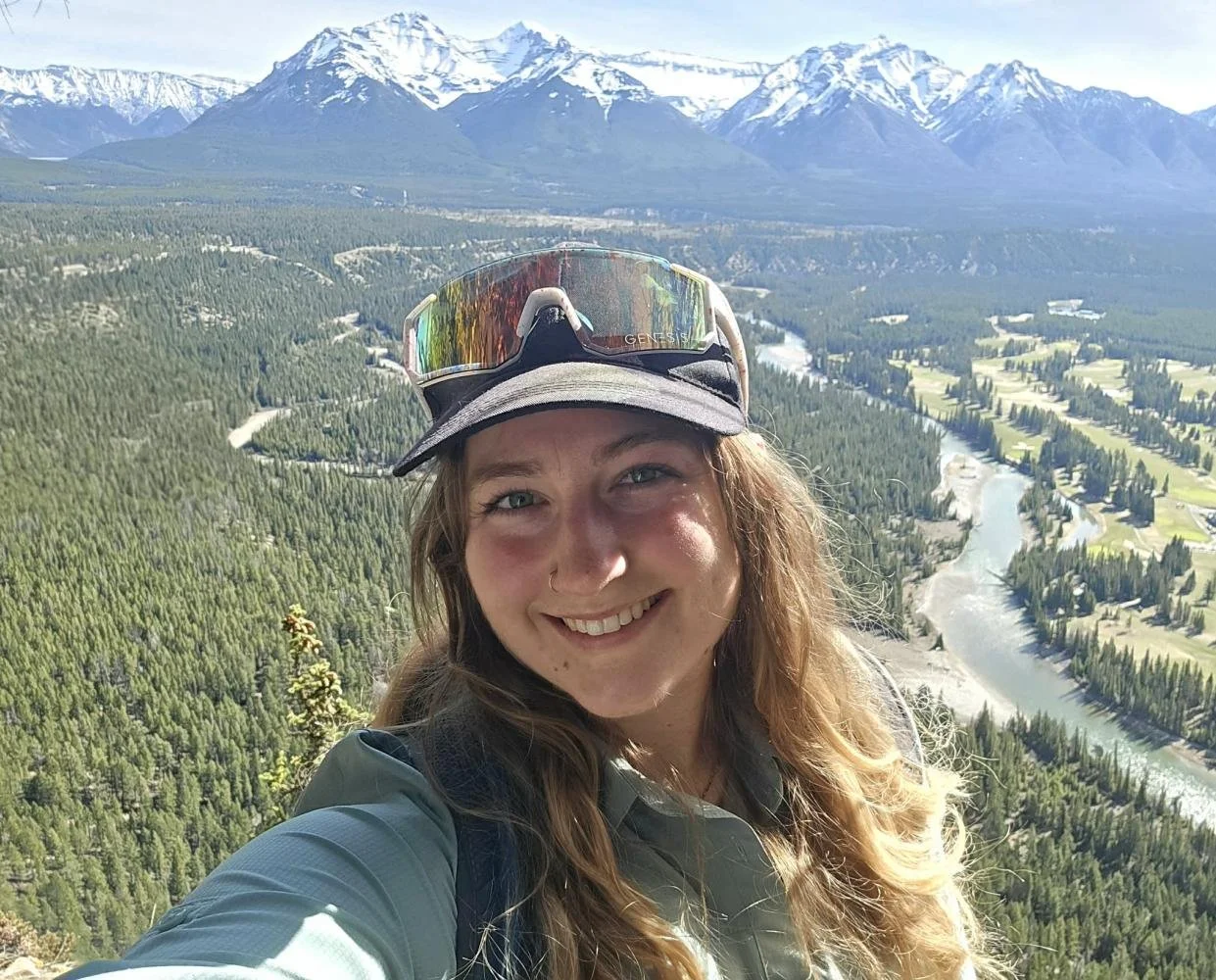
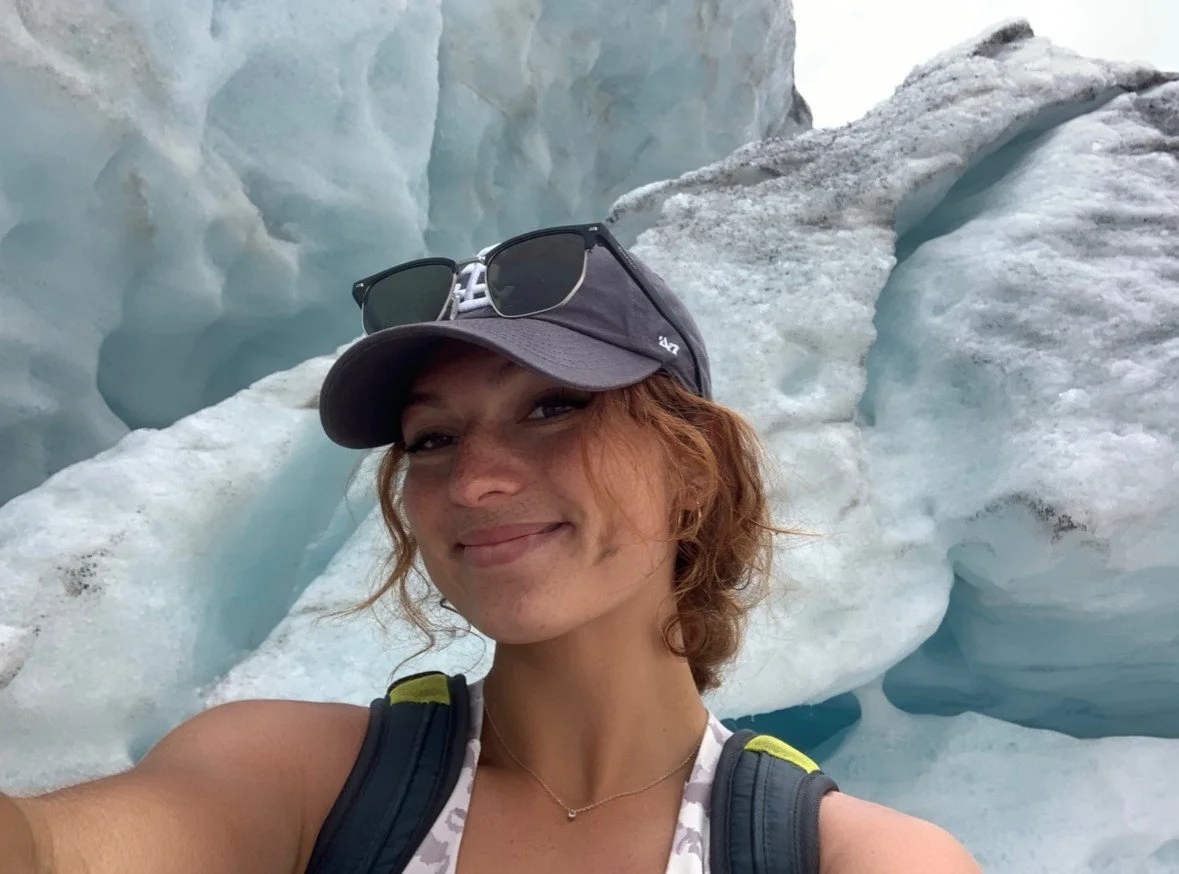
Cate Crawford-Thompson (She/Her), MSc Student
Weaving Ways of Knowing in Mooz Ecology
Cate is a non-Indigenous MSc candidate at the University of Guelph, supervised by Dr. Jesse Popp. In partnership with Magnetawan First Nation, her research brings together Indigenous Knowledge and Western science to explore Moose (Mooz) ecology. As a culturally and ecologically significant species, moose play an important role in Ontario’s landscape, and understanding where and how they use their habitat is critical to supporting their conservation. This project aims to weave ways of knowing to inform caretaking strategies, strengthen community relations, and contribute to the broader Moose Alliance project and Moose Knowledge Network.
MacKenzie Roberts, Research Assistant
Re-establishing healthy relationships to wild species
Mackenzie Roberts is an undergraduate student at the University of Guelph of Métis-Ojibwe descent. She works as a Research Assistant in the WISE Lab under the supervision of PDF Jessica Lukawiecki. Mackenzie supports co-leads on an Ărramăt project that engages in collaborative research with Indigenous Nations who are working to restore healthy relationships with wild species in Canada and Brazil.

Part of the WISE Lab team - North American Caribou Workshop & Arctic Ungulate Conference 2023


Some of the WISE Lab team and our research partners enjoying time at the Cambridge Butterfly Conservatory (left) and having fun at the Indigenous Lands Symposium (right) in 2024
Former Lab members
Postdoctoral Fellows
Allyson Menzies (2021-2023) - Prioritizing Indigenous Knowledge Systems and Values in Environmental Monitoring
Kaitlyn Rathwell (2022-2023) - Prioritizing ethical space to support engagement among scientists and Indigenous communities
Ella Bowles (2019-2021) - Cultural Keystone Species in a Changing World
Research Associates
Pauline Priadka (2020-2021) - Weaving Indigenous and Western Knowledge to investigate moose population decline
MSC STUDENTS
Christopher Lim (2024-2026) - Ma’iingan Wat Saa Maa Jig (those who walk with wolves): Using Anishinaabek and western science in understanding the spatial ecology of wolves on Mnidoo-gamii (Georgian Bay)
Natasha Hirt (2023-2026) - Meeshkodewaang (Prairie Point) Alvar: prioritizing Indigenous Knowledge and values in mnidooshenhs (insect) monitoring with Wiikwemkoong Unceded Territory
Michelle Beltran (2023-2025) - Community-based Apakawaanaajiinh; Pashkwaanaajiinh (Bat) monitoring: Prioritizing Indigenous knowledge and values
Karl-Antoine Hogue (2022-2024) - Land Guardians and linear corridors: Weaving knowledge and prioritizing Indigenous values in Grey Wolf (Zhòh, Canis lupus) research in the North Boreal
Elena McCulloch (2022-2024) - Weaving knowledge systems to understand moose (mooz; moswa; Alces alces) winter habitat relationships
Claire Kemp (2021-2023) - Optimizing community-based wildlife monitoring: Prioritizing Indigenous knowledge and values
Kathryn Yarchuk (2021- 2023) - Bridging knowledge systems in moose ecology research
Heather Patterson (2020-2023) - Environmental and socio-cultural impacts of glyphosate-based herbicides: perspectives from Indigenous Knowledge and Western Science
Kyle Vincent (2020-2022) - Weaving Indigenous knowledge and western science to investigate the impacts of railways on
wildlife
MES Students
Zachary Carmona (2025) - Uplifting Indigenous approaches to caring for and monitoring the health of wild species
Anjuli Dabydeen (2024) - Re-Establishing Healthy Relationships to Wild Species
Alexandra Amos (2022) -Weaving Knowledge Systems for the Environment: An Ethical Online Space for Learning, Sharing, and Networking
Bradley Howie (2021) - Weaving Anishinaabe Science and Knowledge into the University of Guelph Arboretum
Undergraduate Honours students
Finn Pawlick-Potts (2024-2025) - Blanding’s Turtle Railway Monitoring
Chrystyn Jones (2021-2022) - Road vs Railway Mortality
Brittney Henry (2020-2021) - Persistence of Glyphosates in Ontario
Connor Nickel (2019-2020) - Elk Railway Spatial Ecology
Independent Study Students
Megan Gallant (2019-2020) - Climate Change: Indigenous Perspectives
Interns
Diandra Stacey (2019-2020) - Indigenous Gardens Intern
Raven Elwell (2019) - Indigenous Gardens Summer Intern
Research Assistants
Finn Pawlick-Potts (2023) - Indigenous Undergraduate Research Assistant
Juanid Khan (2022) - Weaving Knowledges for Environmental Research
Kaitlyn Raine (2021-2022) - Braiding Knowledge systems in a good way
Emma McNeill (2021) - Weaving Indigenous and Western knowledge to inform cumulative effects projections in the Ring of Fire
Mihar Raouf (2019) - Cultural Keystone Species and Indigenous Gardens
Volunteers
Sarah Hasenack (2021) - Weaving Ways of Knowing Website